
We all think we’re ethical, just as we all think we have a good sense of humour.
But I can’t stand Ricky Gervais, yet Greg Davies makes me laugh until I hyper-ventilate.
Just like our humour, we may interpret our values differently – yet we have more in common than we think.
World Values Day is an opportunity to reflect on our values and how they are an important contributor not just to our wellbeing, but to the wellbeing of those around us – at work and in our communities and organisations.
Your true North
I think of my values as a compass. They help me find my way when I’m not sure what path to take. They help to navigate my life, pointing to my ‘true North’ when faced with a decision, particularly one for which there is no obvious ‘wrong’ answer.
Your values are what’s important to you. The have been shaped by your upbringing, family, culture, education, friends and your experiences. Your values are integral to how you see yourself and how you show up in the world.
Living your values is a powerful factor in your wellbeing – feeling good and functioning well.
Positive psychologist Martin Seligman’s PERMA model of wellbeing outlines five measurable elements that contribute to a happy, engaged, and fulfilling life – positive emotions; engagement; relationships; meaning; and accomplishment. Our values are essential contributors to these elements. Specifically, they provide meaning in life, shaping our sense of accomplishment. And they also shape our relationships and how we connect with each other.
The ethical iIllusion
The majority of people genuinely want to do the right thing. But we possess a remarkable ability to justify our actions, even when they may not align with our stated values, or may be unethical or illegal. I’m listening to the Dark Pattern by Guido Palazzo and Ulrich Hoffrage. It is full of real life case studies where people have felt able to justify their actions in some way. Actions which destroyed organisations and people’s lives.
The Dark Pattern describes scenarios where people were able to convince themselves they were doing the right thing. Their values – to achieve targets at all costs; to make money for shareholders; even to make a positive difference to people’s lives with innovation – helped them maintain the “ethical illusion”that they were good people.
But here’s a situation perhaps closer to home than the scandals of multi-national corporations like Volkswagen, Boeing, Uber, Wells Fargo.
 Imagine the happily married man, pillar of community, successful leader in his field. The ethical illusion he has of himself is that he is a good person. He’s a good father, husband, provides for his family. But he has an affair with a co-worker. He justifies the affair, fading the ethical implications: my wife doesn’t know, so it won’t hurt her; it’s just a bit of fun; it doesn’t affect work; we’re consenting adults.
Perhaps the question should be, not whether we are ethical, but why aren’t we unethical all of the time? It’s not like we’re being followed around by Coldplay’s KissCam.
Our values – if we listen to them – motivate us to “do the right thing” – even when nobody’s watching.
Beyond laminated values
In organisations, values represent the principles that guide the behaviour of the people who work there, shaping the corporate culture.
Corporate values often get a bad press. I’ve heard them called “laminated values”—nice, shiny words stuck on a wall, ultimately meaningless.
Schein’s Organisational Culture pyramid is often shown as an iceberg with the way we say we get things done – the espoused values, the ones on the wall – above the water line and the way we really get things done hidden below the water. The dangerous unseen part of the iceberg that will sink your organisation.
But actually, what an organisation really values is in plain sight; it is lived out every day in the way we work around here.
Just as our personal values are nurtured by watching the adults around us, an organisation’s true values are shaped by the behaviour of the people who work there, the behaviour of leaders at all levels, the stories that are told and the unwritten rules.
Do they match the espoused values – the ones on the wall, the website? If these match the lived values, that’s when an ethical corporate culture can flourish.
The power of values
I’ve experienced the power of lived corporate values as a patient.
I ended up spending a great deal of time in hospital when I was diagnosed with a rare form of Non-Hodgkins Lymphoma. Pietr, the catering assistant, took immense pride in knowing how every patient took their coffee, whether they liked their tea weak or strong in the afternoon, and if they preferred a Rich Tea or a Digestive biscuit (NHS biscuits are not very adventurous).
I asked him how he remembered everybody’s preferences.
“Patient’s First,” he said, proudly patting his name badge which had the Hospital Trust’s motto printed on it.
Pietr had taken the corporate values and applied it to his daily work.
Working to put patients first gave him meaning in his work, a core factor in wellbeing, and a contributor to psychological empowerment. He also gave us patients a glimmer of joy in the terrifying mundanity of a cancer ward.
Bringing our best selves to work
Living our corporate values, and bringing our whole selves to work can be a conflict.
Current issues affecting us as a society, globally, nationally, are playing out in our communities and workplaces, in our behaviour and tolerance of one another. Conflicts fired by ideology as much as territory; the rights of women – whether they are born female or trans; racism masking as patriotism; local and national politics. One side calls it freedom of speech, the other feels it as hatred. These are emotional, visceral topics, intertwined with identities.
So when organisations say – we support people to bring their whole self to work – do they really mean that?
Perhaps what we really mean is – bring your best self to work. Your kindest, compassionate, listening self to work.
Shared Values
In the late 90s at the start of my career in business ethics – when people still made jokes about it being an oxymoron – Rushworth Kidder, the late founder of the Institute of Global Ethics, was searching for a set of global ethical values.
He travelled the world interviewing “men and women of conscience” in order to establish a global code of ethics with the aim of “helping to create the moral conditions for a sustainable twenty-first century.”
He found that there are commonalities with shared values across nations, religions, cultures:
- compassion
- respect
- fairness
- honesty and
- responsibility.
Norms and practices may differ and how we act on our values may be context specific, but at the heart of it all we have more in common than we think.
This is important, because in the current climate, with the rhetoric of them and us, nobody is flourishing. Not on a macro level – in our nations, towns and communities – or on a micro level – in our organisations, teams, social media feeds. We are pitted one against the other, othering people who are different from us in someway – whether that’s a different heritage, sexuality, age, gender, profession.
We need to remember our shared humanity. And when we’re giving voice to our own values, we also need to be listening to what other people are saying about theirs. The tricky part is how to respond in line with our values when what we hear is so at odds with them.
Speaking up can be a challenge, especially in an unsupportive environment. Psychological safety doesn’t flourish in a vacuum. It’s what you do, not just what you say. It’s built by demonstrating that when people speak, they are heard. That can be a challenge when what we hear is anathema to us. But if we can call on our shared values, perhaps we can build together a culture of tolerance.
This is water
We all have a part to play in this. We are all part of the culture. Culture is what we build together in our day-to-day actions.
I come back to the story told by David Foster Wallace to a graduating class:
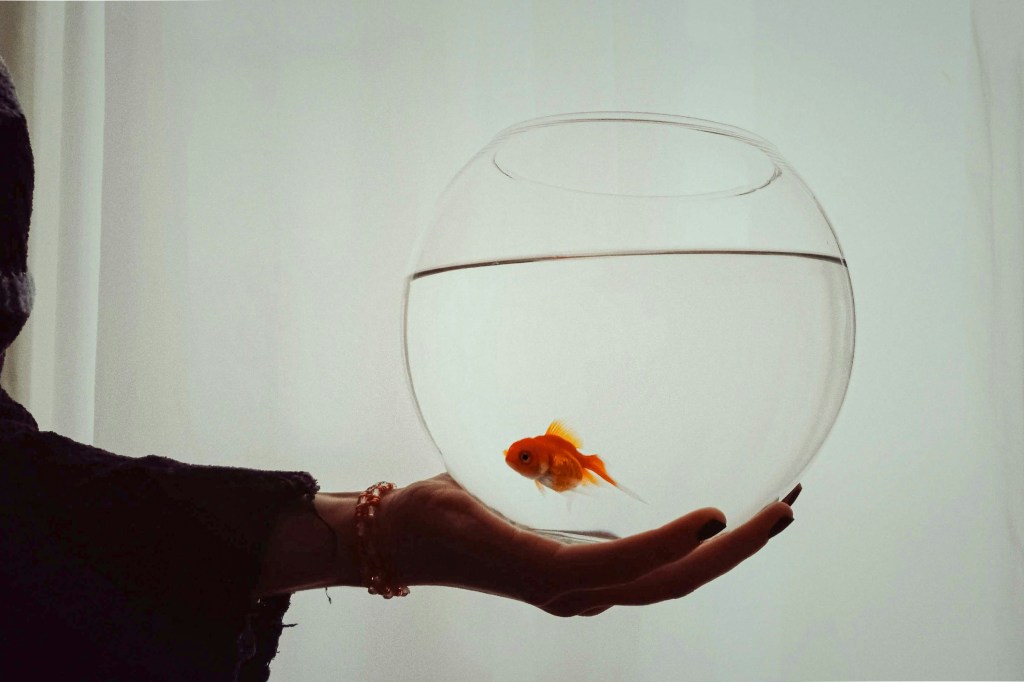
There are these two young fish swimming along and they happen to meet an older fish swimming the other way, who nods at them and says “Morning, boys. How’s the water?” And the two young fish swim on for a bit, and then eventually one of them looks over at the other and goes “What the hell is water?”
This is water.
Just like the young fish, we can be so immersed in our everyday environment that we stop noticing it.
We are culture
Sometimes we can be so immersed in the water of our day to day, it’s so easy to blame others for the ‘toxic culture’ – whether that’s leaders, managers, social media, the government, Elon Musk or Donald Trump.
It makes us ‘ethically blind’ to our contribution.
I invite you to think about these questions, perhaps share them with your colleagues. They’re adapted from David Naylor’s excellent book: Speaking Up in a Culture of Silence
- What attracts me to this organisation/community?
- What have I forgotten since I joined?
- What are my concerns about how we speak to each other?
- Where are the gaps between our espoused values and what we do?
- Where are my red lines?
Giving voice to our values and listening to others’ contributes to our wellbeing and the healthy functioning of the organisations we work in and the communities we live in.
This is water. We are culture.
 Gowpen
Leave a comment